

How To Build Muscle (The 4 Things That Actually Matter)
 X
X Facebook
 Reddit
 Pinterest
 WhatsApp
To build muscle you need a compound-exercise workout plan, the right resistance (6–12 rep range), enough protein (~1g per lb of body weight), and consistency. Here’s how each piece works.
How Long Does It Take To Build Muscle? (Realistic Expectations)
Let’s make sure you are not wasting your time on this: if right now you are skinny as a match or resemble the Michelin guy, you won’t look like an underwear model in six months.
Building muscle takes time and self-discipline. If all those guys selling them miracle “scrawny to brawny in three months” programs had the real deal on offer, we would all be using those methods, trust me.
You do get stronger from day 1 that you start working out and will look better after month six, but most of the strength gains you get during the first half-year of weight training come from your brain learning to use the existing muscle mass better.
Only after you established this mind-muscle connection will the muscles have to gain in size to become stronger.
How To Build Muscle: 4 Ingredients
Still with me? Then let’s get to the nitty-gritty of the muscle-building business. You need four things to get those bulges of your dreams:
- A workout plan that is correct for your level of experience
- Doing the exercises in that plan with the right amount of resistance to get muscle growth
- Giving your body the nutritional building blocks necessary to then actually build the muscle
- Being consistent and sticking with 1-3
Now let’s examine these one by one.
1. The Right Workout Plan (Compound Exercises First)
Some beginners start with a workout plan that would make Arnold Schwarzenegger pale: three chest exercises, six arm exercises, four back exercises and half a dozen each for the legs and abs.
Problem is that 90% of these aren’t necessary for beginners and chances are they do them wrong anyway. Because these specialized exercises require other muscles as “stabilizers” to let you work the target muscle. In a beginner, the future stabilizers are still in bodybuilding kindergarten.
What you need instead are so-called “compound exercises” that work many muscles at the same time and to do them as part of a whole body workout routine. This will build your basic strength.
An example for such a plan you can find right here, complete with information when you will have graduated to the next step.
2. How To Choose The Right Weight For Muscle Growth
“Resistance” when building muscle is the weight you have to work against. It can come from a dumbbell, your body or whatever else you have around. Key is that this resistance is big enough, but not too big.
If the weight you work with is too small and you do, say, 40 dumbbell curls or push-ups, you are not growing your muscles, you are training their endurance. That does not make them bigger, because the muscle fibers responsible for endurance do not have to become larger to get stronger.
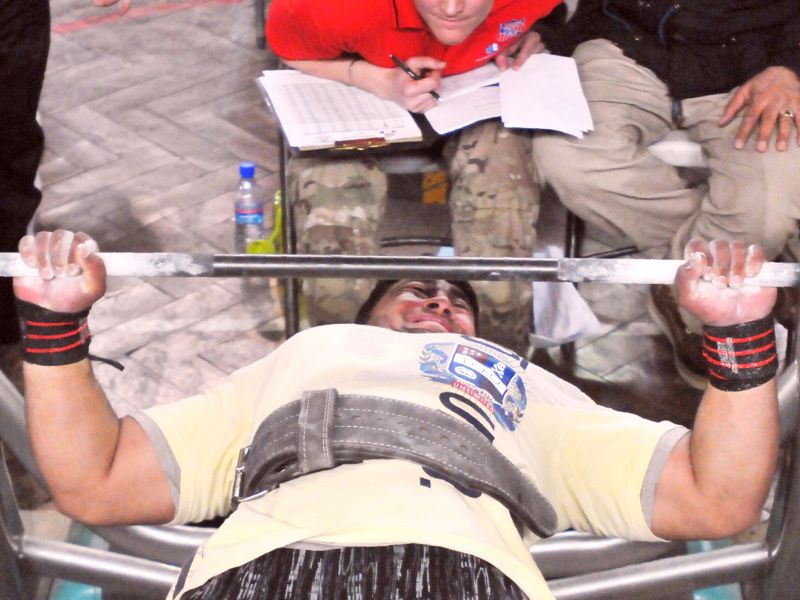
If, on the other hand, you use a weight that is too big, you end up either injuring yourself or training entirely different muscles than the ones you think you are. All those guys at the gym swinging the dumbbells and bending backwards when doing biceps curls are not exercising their biceps – they are training their hips and use momentum.
The rule of thumb for the right resistance is a weight with which you can do the movements of an exercise at least six times and no more than twelve. All with good form and feeling like the last rep of the last set is really the last you are able to do.
3. How To Eat To Build Muscle (Protein & Carbs)
Would you be surprised if I told you that many guys fiddle forth and back with their workout plans when failing to make progress and don’t see the true reason why they are stuck? They never figure it’s their nutrition.
Your body builds your muscles from protein. No matter how great and intelligent your workout plans are, if you don’t get enough protein, your efforts won’t pay off. If the body lacks protein, it doesn’t have the building blocks necessary to build muscle. It would, but it can’t.
This is much easier taken care of than gym lore has you believe. To get enough protein you don’t need supplements and the daily amounts necessary are far lower than some muscle heads subject themselves to. Aim for about 1 g of protein per lb of body weight per day and simply have that from the food source most convenient to you.
To get an extra energy boost before your workouts, you want to have some carbohydrates, because they are the No. 1 fuel source your body relies on when doing heavy stuff.
If you have no idea what to eat when, I compiled a complete nutrition plan covering an entire week. It’s in PDF format and you can download it for free right over here.
4. Consistency: Why Most People Stop Before It Works
Here we go full circle. If you made it through this article up to here, you now know how to build muscle and more importantly also have a pretty realistic idea about what you can expect. That in my opinion is the best guarantee to keep going.
Most people I see give up had unrealistic expectations, filled by infomercials and snake oil sellers. If they had given things a bit more time, they very likely would have gotten the muscle mass they wanted.
Frequently Asked Questions
Do I need protein powder to build muscle?
No. You need about 1 g of protein per lb of body weight per day. That’s it. If you can get that from chicken, eggs, fish, dairy, or whatever else you already eat, you don’t need a scoop of anything. Powder is just a convenience, not a requirement.
How many days a week should I train?
Two to three is the sweet spot for beginners. You need rest days. Your muscles don’t grow while you’re working them. This is the single most common reason beginners stall: they work out too often and wonder why nothing is happening.
What if I’ve been training for a month and I don’t look different yet?
Keep going, because you’ve been building the foundation. Your nervous system is learning to recruit muscle fibers it was ignoring before. That’s real progress even if the mirror hasn’t caught up. The visible size comes after the mind-muscle connection is solid. For most people this takes somewhere around six months of consistent training. If you quit at month one because the changes are subtle, you’re quitting right before the part where it gets visible.
Is a home workout enough, or do I need a gym?
For the first phase of building muscle, you don’t even need equipment. The compound movements you do as a beginner – push-ups, pull-ups, lunges – only require your body as weight. A pull-up bar may the be the most most you want to add at that point. Later a pair of adjustable dumbbells will come in handy. Much later a gym can give you more options to fine-tune, but that’s a long way down the road. Plenty of people build impressive muscle at home for a year or more before they even need a rack of plates.
Do I have to hit a hard failure on every set?
No. You need the last rep of the last set to be genuinely hard. Your form shouldn’t break down and you shouldn’t be able to do more than maybe one more clean rep. Chasing absolute failure on every set every time invites injury and extends your recovery window past what’s productive. The 6-to-12 range exists for a reason. If you can crank out fifteen, the weight is too light. If you can barely manage four with clean form, it’s too heavy.
Pictures courtesy of “fsecart“, “isafmedia” and Ramsey Beyer.
Tags: bodybuilding, exercise, fitness, how to build muscle, nutrition, protein, workout
11 Comments
This is exactly the plan a fitness trainer friend of mine (emergefit.com) set up for me, and I have been doing for the past month and a half! I feel it is working!
If I had to add one thing to the article, it would be to have adequate rest periods between workouts.
“You have to get stronger to get bigger, and you have to get bigger to get stronger.” 🙂
You are absolutely correct, J!
This was great. I was looking forward to the video Evil! 🙁
No video! :OOOOOOOOO
Anyhow, the only item I would suggest adding is sufficient rest. Both bed-rest each night and rest for your muscles on off-days.
Some mention of over training here might help? IF you don’t rest yourself and your muscles, you wont’ get any bigger either right?
I thought about doing this as a video, but feared it would get way too long.
Point about rest and overtraining taken! I will see that I add this.
Great points & people fail to just do this…. DR. J is right about rest to.. For me, after you have the learning down & know your own bod, it then becomes about what is right for you & not anyone else.. we are all different & respond differently ! 🙂
Very true. I feel that in the beginning you can start out with a general workout plan, but later have to be guided by your experience to find out what works best for you.
Great article!
By the way, I have a question regarding protein.. If you don’t have enough protein, will that just result in taking much longer for the muscles to get bigger and stronger? Or will that result altogether in muscles not getting bigger and stronger?
Sorry if I don’t make sense, I will rephrase it if it is confusing 😀
You got it right: If you don’t have enough protein, then the body will have to make do with what it got. Results will take longer to appear.
Thanks again! 😀
I’m starting to feel guilty that I’m asking a lot of questions, and you giving answers to them for free!
Really appreciate it what you’re doing here for us!
[…] Source […]
That’s a great overall workout plan! I like how you address food, workouts, brain, and commitment.
Plz Enlist Exercise by which to bulk the body & by which to loose the body !!………