

6 Psychological Weight Loss Tricks
 X
X Facebook
 Reddit
 Pinterest
 WhatsApp
Brian Wansink is a consumer psychologist at Cornell University. At the annual meeting of the American Psychological Association he presented six weight loss tricks that can make you eat less.
The Mind Has Fallacies
Professor Wansink believes that when it comes to eating, it is easier to change the environment than the mind, because the mind can be rather misleading.
In an experiment, for example, he designed a “bottomless” soup bowl, that automatically refilled itself. The people eating from these bowls on average ate 73% more than those who had a regular bowl – and weren’t even aware of it.
But Wansink found that if we consciously decide to be aware of our mind’s weaknesses, we can work with them:
1. The Right Plate
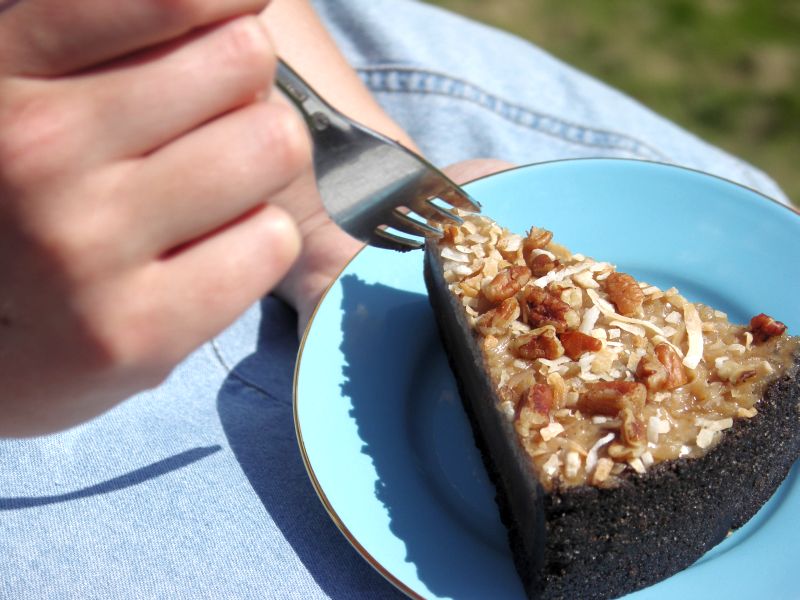
According to Wansink, children pour around double the amount of cereal into a 16-ounce bowl than into an 8-ounce bowl. Simply choosing a smaller plate to have your meals from can therefore have a striking effect on the amount of food eaten.
2. Caloric Behemoths Out Of Sight
It’s the same thing supermarkets use to make us buy more expensive stuff: What’s at eye level on the shelves gets chosen more often, which is why you have to bend down to get the cheap generic brand stuff. In your home you can make use of this trick by putting high calorie foods on shelves where you are less likely to notice them: those on the very top or bottom.
3. No TV Or Computer During Dinner
People that watch television or use the computer when they eat, eat more mindlessly. Therefore leave both turned off when you consume food and rather have your mind preoccupied with the food – literally – at hand.
4. Eat Food At The Right Places
The last is a tie-in with this one: Instead of eating food at your desk or in front of the television, get back to the dining room or kitchen table. The simple act of consciously sitting down to eat at a table designed for that purpose lets you eat more consciously.
5. Choose Smaller Portions
In a study with 168 movie theater visitors, Wansink looked at the portion sizes of popcorn they had bought and how much they in the end consumed. Those who had bought an “extra large”, ate 45% more popcorn than those who chose a “large” size, even if the popcorn was stale. Simply because the stuff was there. Pick smaller portions – you will eat less if less is available.
6. The Right Glass
It’s intriguing that apparently even the form of the glass we choose to drink from can dictate how much we consume.
Low but wide glasses tempt people to pour more into them than tall but narrow glasses. Simply because in the first the amount seems to be less – the eye is easily deceived again. Imagine like how much a double whiskey would look, if you didn’t have it in the usual tumbler, but in a Collins glass.
Karl Marx Was Right
Maybe Marx was right, at least in that regard, although he probably didn’t foresee his impact on the obesity discussion: The form of being dictates consciousness.
If you try out Prof Wansink’s tricks, I’d be much interested to hear how they worked for you.
Picture courtesy of Sam Mugraby / photos8.com and gleangenie“.
Tags: calories, diet, food, wansink, weight loss
7 Comments
Very useful info. Humans want what they want. Overcoming that is hard work, but very fulfilling at the end of the day!
I’m more interested in doing the opposite 😀 where can I get bottomless soups? I want a tomato fountain
AWESOME article as always, Freddie! 😀
Some of your suggestions regarding how to eat match those made by Robert K. Cooper in “Flip the Switch” ^_^ Keep it up!
-Steve
Well, Bruce, I think that is one of the qualities that should set us apart from animals. Not that that is always evident 😉
Glad common sense is alive and well.
It’s not always evident, but there’s hope it will prevail 😉
Nice. I will reverse these tricks to eat more. I really need it, lol.